
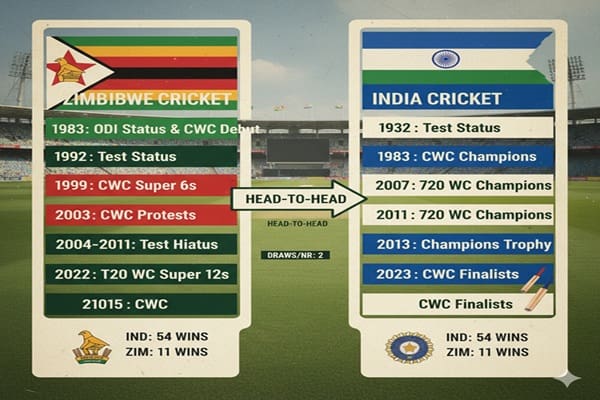
If you’re anything like me, you don’t just watch cricket for the scores you watch it for the stories, the unexpected heroes, and those “wait… did that really just happen?” moments. And honestly, the Zimbabwe National Cricket Team vs India National Cricket Team timeline delivers all of that and more.
This rivalry doesn’t scream drama the way India vs Pakistan does, but it sneaks up on you. It’s full of underdog wins, breakout performances, and quiet milestones that shaped modern cricket. I’ve followed these clashes for years, and IMO, they’re way more interesting than people give them credit for. So yeah, let’s talk about it friend to friend, cricket nerd to cricket nerd.
Contents
- 1 The Early Days: When Zimbabwe Announced Itself (1980s-Early 1990s)
- 2 The 1990s: Competitive Cricket and Mutual Respect
- 3 The 2000s: India Takes Control, Zimbabwe Fights On
- 4 ODI Encounters: Where Most of the Magic Happened
- 5 Test Matches: Short, Sharp, and Telling
- 6 T20 Era: A Whole New Vibe
- 7 Head-to-Head Snapshot: Numbers vs Reality
- 8 Why This Timeline Still Matters Today
- 9 Key Takeaways from the Zimbabwe vs India Timeline
- 10 Final Thoughts: A Rivalry Worth Remembering
The Early Days: When Zimbabwe Announced Itself (1980s-Early 1990s)
Zimbabwe didn’t just walk into international cricket they knocked on the door and said, “Hey, we belong here.”
Zimbabwe’s Big Entrance onto the World Stage
Zimbabwe made waves during the 1983 Cricket World Cup, and Indian fans still remember that match vividly. Zimbabwe stunned India with disciplined bowling and fearless batting. I still hear older fans talk about it like it happened yesterday. Ever wondered how one match can change a team’s destiny?
That win did two big things:
-
It put Zimbabwe on the global cricket map
-
It reminded India that no opponent deserves complacency
FYI, this was the moment when Zimbabwe stopped being “that associate team” and started being a legit threat.
India’s Learning Curve
India responded the only way strong teams do by learning fast. Subsequent encounters showed better preparation, sharper bowling plans, and more respect for Zimbabwe’s grit. India didn’t dominate yet, but you could sense the balance shifting.
And honestly, that’s what made these early games fun to watch.
The 1990s: Competitive Cricket and Mutual Respect
Ah, the ’90s. Bold jerseys, iconic players, and cricket that felt raw and real.
Zimbabwe’s Golden Generation Emerges
This era belonged to Zimbabwe’s fighters. Every match against India felt competitive, especially in limited-overs formats. Zimbabwe played fearless cricket, often punching above their weight.
Key highlights from this phase:
-
Tight ODIs that went down to the wire
-
Zimbabwe frequently testing India’s middle order
-
Fielding standards that surprised everyone
I remember thinking, “Why does India always look slightly uncomfortable against Zimbabwe?” Ever felt that way too?
India Finds Its Rhythm
India slowly turned the tide with stronger batting depth and smarter bowling rotations. The team learned how to handle pressure games against disciplined opponents.
By the late ’90s:
-
India won more consistently
-
Zimbabwe still never felt like an easy win
-
Matches stayed competitive till the final overs
No blowouts. Just proper cricket.
The 2000s: India Takes Control, Zimbabwe Fights On
This is where the timeline clearly tilts in India’s favor but not without resistance.
India’s Rise as a Cricket Powerhouse
With improved fitness, deeper squads, and aggressive strategies, India started asserting dominance. Tours against Zimbabwe became opportunities to test bench strength, but the games still mattered.
India focused on:
-
Developing young talent
-
Experimenting with new bowling combinations
-
Strengthening its away-game mentality
And yes, India won most of these encounters but not without effort.
Zimbabwe’s Resilience Shines Through
Even during tough years, Zimbabwe never stopped competing. They delivered performances that made fans sit up and pay attention.
What stood out:
-
Individual brilliance despite team struggles
-
Strong starts that challenged Indian bowlers
-
Never backing down, even when outmatched on paper
IMO, that resilience kept the rivalry alive when it could’ve easily faded away.
ODI Encounters: Where Most of the Magic Happened
If you ask me where this rivalry truly lived, I’d say ODIs no hesitation.
Why ODIs Suited This Rivalry Perfectly
ODIs gave Zimbabwe enough time to settle and fight back, while still demanding adaptability from India. The format exposed weaknesses fast.
Key ODI trends:
-
India usually controlled the middle overs
-
Zimbabwe often struck early with the ball
-
Matches hinged on small momentum shifts
Ever noticed how a single dropped catch changed entire games in this rivalry? Yeah, same.
Memorable ODI Moments
Some games still live rent-free in my head:
-
Zimbabwe collapsing India’s top order early
-
Indian youngsters announcing themselves with centuries
-
Nail-biting finishes that defied rankings
No flashy hype, just solid, watchable cricket.
Also Read : India National Cricket Team vs Bangladesh National Cricket Team Timeline
Test Matches: Short, Sharp, and Telling
Test cricket between India and Zimbabwe never happened often, but when it did, it mattered.
India’s Test Dominance
India generally controlled Test matches with:
-
Spin-friendly strategies
-
Strong batting partnerships
-
Disciplined bowling spells
These matches highlighted India’s depth and patience in the longest format.
Zimbabwe’s Learning Ground
For Zimbabwe, Tests against India acted as:
-
A benchmark for elite cricket
-
A chance to test technique and temperament
-
Valuable exposure, even in defeat
And honestly, that experience mattered more than the results sometimes.
T20 Era: A Whole New Vibe
When T20s entered the chat, things changed fast.
India’s Firepower Takes Over
India’s aggressive batting made a big difference in T20Is. Powerplays became decisive, and Indian bowlers used variations smartly.
India focused on:
-
Explosive starts
-
Flexible batting orders
-
Data-driven bowling plans
The results? Mostly wins but not without drama.
Zimbabwe’s Bold Approach
Zimbabwe played T20s like they had nothing to lose. That mindset led to:
-
Brave shot selection
-
Surprise wins in isolated matches
-
Young players stepping up under pressure
And let’s be real those surprise moments are why we love cricket 🙂
Head-to-Head Snapshot: Numbers vs Reality
Stats tell one story, but the field tells another.
What the Numbers Say
Overall trends show:
-
India leading comfortably across formats
-
Zimbabwe winning fewer matches
-
A clear gap in squad depth
What Fans Actually Remember
Fans remember:
-
The 1983 World Cup shock
-
Close ODIs that India barely scraped through
-
Zimbabwe players outplaying expectations
Sometimes, cricket isn’t about who wins more it’s about who leaves an impression.
Why This Timeline Still Matters Today
You might ask, “Why should I care about this rivalry now?” Fair question.
Here’s why it matters:
-
It shows how underdogs shape the game
-
It highlights India’s evolution over decades
-
It proves cricket thrives beyond just top-tier rivalries
I’ve always believed cricket needs stories like this to stay honest and human.
Key Takeaways from the Zimbabwe vs India Timeline
Let’s wrap the main points cleanly:
-
Zimbabwe earned respect early and never lost its fighting spirit
-
India grew stronger with every phase of this rivalry
-
ODIs delivered the most balanced and entertaining contests
-
T20s added unpredictability and fresh energy
-
The rivalry reflects cricket’s competitive soul, not just rankings
Simple, right?
Final Thoughts: A Rivalry Worth Remembering
The Zimbabwe National Cricket Team vs India National Cricket Team timeline doesn’t shout for attention but it deserves it. It reminds us that cricket isn’t only about trophies and dominance. It’s about growth, resilience, and those rare moments when the underdog makes you spill your chai in surprise :/
So next time these two teams meet, don’t skip the match thinking you know the outcome. Cricket has a funny habit of rewriting scripts when you least expect it. And honestly, that’s why we keep watching, isn’t it?