
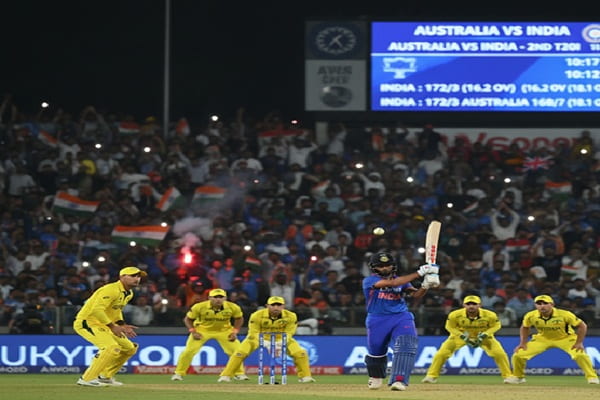
Quick Answer
India and Australia have played over 300 international matches across all formats since 1947, making this one of the most played bilateral rivalries in cricket history. Australia leads the all-time head-to-head across Tests and ODIs. India holds the edge in T20 Internationals. The rivalry is best known for the Border-Gavaskar Trophy, the 2001 Kolkata miracle, back-to-back Indian series wins in Australia in 2018-19 and 2020-21, and two World Cup finals in 2003 and 2023.
Contents
- 1 How This Rivalry Actually Started
- 2 Head-to-Head Record Across All Formats
- 3 Era One: The Long Shadow of Australia (1947 to 1970)
- 4 Era Two: The Turning Point (1970 to 1990)
- 5 Era Three: The Golden Age of the Rivalry (1990 to 2010)
- 6 Era Four: India Becomes the World Power (2010 to 2017)
- 7 Era Five: The Modern Classic (2018 to Present)
- 8 The Border-Gavaskar Trophy: Cricket’s Most Coveted Test Prize
- 9 Iconic Matches in Every Format
- 10 Key Players Who Defined This Rivalry
- 11 Statistics That Tell the Full Story
- 12 What Makes This the Greatest Rivalry in Cricket
- 13 Frequently Asked Questions
- 14 Conclusion: A Rivalry That Keeps Writing New History
How This Rivalry Actually Started
Picture this. November 1947. India had just become an independent nation four months earlier. The country was still piecing itself together after partition. And somehow, in the middle of all that, India sent a cricket team to Australia to play Tests against the best side in the world.
They got hammered. Australia won the series 4-0. Don Bradman was at the peak of his powers. India were out of their depth on the bouncy Australian pitches. It was a mismatch on paper and it played out that way.
But here is the thing about that 1947 series. It planted a seed. India would come back. And when they finally found their feet, the contests between these two nations would become some of the most memorable in cricket history.
What started as a one-sided dominance story in 1947 has evolved into a genuine rivalry of equals, a rivalry that now generates more broadcast revenue than any other bilateral cricket series on the planet.
Head-to-Head Record Across All Formats
| Format | Total Matches | Australia Wins | India Wins | Draws / Ties / No Result |
|---|---|---|---|---|
| Test Matches | 107+ | 45 | 32 | 30 Draws, 1 Tied |
| ODI Matches | 150+ | 84 | 57 | 10 NR / Tie |
| T20 Internationals | 35+ | 14 | 21 | – |
| Combined | 290+ | ~143 | ~110 | ~40 |
Australia leads overall but the gap is narrowing in every format. India’s T20I dominance is now undeniable.
Era One: The Long Shadow of Australia (1947 to 1970)
The Early Tests: India Learning the Hard Way
India’s first Test in Australia on November 28, 1947 in Brisbane ended in a defeat by 226 runs. Don Bradman scored 185 in that match. Vinoo Mankad, who would later give his name to a mode of dismissal, was the pick of India’s bowlers but it was still a comprehensive loss.
Australia came to India in 1956-57 and again won comfortably. The pattern was clear: Australia dominated whenever and wherever they played India through the 1950s and into the 1960s.
The first real moment of resistance came in 1959-60 when India registered their first ever Test win against Australia, in Kanpur. India won by 119 runs. It was a landmark, though Australia still won the series. For Indian cricket at the time, just beating Australia once felt like a statement.
Through the 1960s the series were competitive in parts but Australia always came out ahead. India had some wonderful individual players, but lacked the collective depth to beat Australia over five Tests.
The 1969 Kanpur Test: A Window Into the Future
India beat Australia in Kanpur in 1969, and this time it felt different. Bishen Singh Bedi and Erapalli Prasanna were emerging as world-class spinners. The foundation of what would become a genuinely competitive Indian team was being laid.
Era Two: The Turning Point (1970 to 1990)
India’s First Series Win: 1979-80
After decades of trying, India finally won a full Test series against Australia in 1979-80, playing at home. It was India’s first ever series win against Australia and it arrived at a time when the rivalry was growing in intensity on both sides.
Sunil Gavaskar was at the heart of it. His ability to stand up to the fastest bowlers in the world, with impeccable technique and composure, made him the defining figure of Indian cricket in this era.
The 1986 Tied Test in Chennai: Cricket History Made
One of the rarest moments in all of cricket happened in September 1986 at Chepauk in Chennai. India and Australia played out a Tied Test match, one of only two tied Tests in the history of the game.
India needed 347 to win in the fourth innings. They came agonisingly close, finishing on 347 all out as the last wicket fell off the final ball. Dean Jones scored a legendary double century of 210 in the Australian first innings, reportedly becoming so ill during his innings on the sweltering Chennai heat that he asked to retire hurt. He was told, in not so gentle terms, to continue. He did.
The match ended as a tie and is regarded as one of the greatest Tests ever played.
ODI Cricket Enters the Picture
India and Australia began meeting regularly in ODI cricket from the early 1980s. Australia dominated the bilateral limited overs series through this decade. The 1985 World Championship of Cricket, a tournament held in Australia, produced some classic early encounters between the two sides.
Era Three: The Golden Age of the Rivalry (1990 to 2010)
This is the era that defines what most fans picture when they think of India vs Australia cricket. It had everything: Sachin vs Warne, the 2001 miracle, Monkeygate, the 2003 World Cup final, and the emergence of the Border-Gavaskar Trophy as the most prestigious bilateral trophy in Test cricket.
Sachin Tendulkar vs Shane Warne: The Battle Within the Battle
In 1998, during Australia’s tour of India, Sachin Tendulkar made a decision that is now part of cricket folklore. Knowing that Shane Warne had destroyed him in the 1997-98 series in Australia, Tendulkar spent the summer preparing specifically to attack Warne’s bowling.
In the Chepauk Test in Chennai, Tendulkar walked out and promptly hit Warne for back-to-back fours off the first two balls he faced. He went on to score 155 not out. The match, the series, and the personal duel between Tendulkar and Warne became defining moments in both players’ careers.
Warne himself said years later that Tendulkar was the best batsman he ever bowled to.
2001 Kolkata Test: The Greatest Comeback in Test History
If you ask a cricket fan to name the single greatest Test match ever played, a significant number will say: the 2001 Kolkata Test between India and Australia.
Australia arrived in India in 2001 having won 16 consecutive Test matches. They were considered possibly the greatest cricket team ever assembled. Steve Waugh was the captain. Glenn McGrath and Shane Warne were in their prime. The team included Matthew Hayden, Adam Gilchrist, Ricky Ponting, and Damien Martyn.
Australia won the first Test in Mumbai by 10 wickets. In Kolkata, they bowled India out for 171 in the first innings and enforced the follow-on. India were 274 for 4 in the second innings, still 32 runs behind, when VVS Laxman and Rahul Dravid came together.
What followed over the next two days is still spoken about in hushed, reverent tones in every cricket-playing nation. Laxman scored 281. Dravid scored 180. They batted together for the best part of two days, adding 376 runs for the fifth wicket. India declared with a lead that Australia could not chase. Harbhajan Singh took 6 wickets as Australia were bowled out for 212.
India won by 171 runs. The 16-match winning streak was over. The series was levelled. India went on to win the series 2-1 in Chennai.
It remains the greatest Test match ever played by India, and arguably by any team.
The 2003 World Cup Final: Australia at Their Ruthless Best
India and Australia met in the 2003 ICC Cricket World Cup final in Johannesburg. India had been outstanding throughout the tournament. Sachin Tendulkar was the tournament’s top scorer. Sehwag was destructive at the top. India arrived at the final as genuine contenders.
Australia were simply unstoppable. Ponting scored 140 not out as Australia batted first and posted 359 for 2. India’s chase never got going. They were bowled out for 234. Australia won by 125 runs and lifted the World Cup for the third time.
It was one of the finest individual performances in a World Cup final. Ponting’s innings has never been matched in a final.
2008 Sydney Test: The “Monkeygate” Controversy
The 2007-08 Australian tour produced one of the most controversial moments in the history of India-Australia cricket. The second Test in Sydney ended in an Australian victory, but what followed the match overshadowed everything that happened on the pitch.
Harbhajan Singh was accused of racially abusing Andrew Symonds and was initially handed a three-match ban. India threatened to abandon the tour. The ICC reopened the case and Harbhajan was eventually cleared of the racial abuse charge and instead found guilty of using abusive language.
The incident left deep scars on both sides and soured the atmosphere for years. It also galvanised Indian cricket: the team and the BCCI came out of it with a stronger sense of collective identity and a willingness to fight back against what they saw as decisions going against them.
Era Four: India Becomes the World Power (2010 to 2017)
Through the 2010s, the rivalry remained intense but increasingly balanced. India were now the dominant force in world cricket from a commercial standpoint and were building a Test team that could compete in all conditions.
The 2011 World Cup Quarterfinal
India beat Australia in the quarterfinal of the 2011 World Cup in Ahmedabad. Yuvraj Singh and Raina saw India home after some nervy moments. India went on to win the World Cup. It was the first time India had beaten Australia in a World Cup knockout match.
Steve O’Keefe’s Unforgettable Match in Pune: 2017
The 2017 Australia tour of India began with a shock. Steve O’Keefe, a left-arm spinner with a modest first-class record, took 12 wickets in the Pune Test as Australia won by 333 runs. India had not lost a home Test series in four years. They had just beaten England 4-0 at home.
O’Keefe took 6 for 35 in the first innings and 6 for 35 again in the second. Identical figures. It was one of the great bowling performances in this rivalry. India fought back to win the series 2-1, but the Pune Test remains a landmark moment.
Era Five: The Modern Classic (2018 to Present)
This is the era that redefined the rivalry. India, for the first time in their history, won back-to-back Test series in Australia. They did it while coping with injuries, without their captain for the second series, and against a full-strength Australian team on their home pitches.
2018-19: India Win Their First Series in Australia
India, captained by Virat Kohli, toured Australia in 2018-19 and won the Test series 2-1. It was the first time an Asian team had ever won a Test series in Australia.
Cheteshwar Pujara was India’s unsung hero, scoring 521 runs in the series. He batted with extraordinary patience on the WACA, the MCG, and the SCG, frustrating the Australian bowlers and anchoring India’s innings time and again. Jasprit Bumrah was devastating with the ball.
India won the Adelaide Test by 31 runs, the Melbourne Test by 137 runs, drew the Sydney Test, and lost the Perth Test. The final series scoreline of 2-1 to India made history.
2020-21: The Gabba Miracle
If the 2018-19 series was remarkable, the 2020-21 Border-Gavaskar Trophy was extraordinary.
India were bowled out for 36 all out in the first innings of the Adelaide Test, Australia’s second pink-ball Test. It was the second lowest score in India’s Test history. Australia won the match by 8 wickets.
Then Virat Kohli left the tour to be with his wife for the birth of their first child. India’s injury list grew match by match. Mohammed Shami broke his arm. Ravindra Jadeja injured his hand. By the final Test, India were fielding players who had been in India A cricket barely a month before.
And they still won.
At the Gabba in Brisbane, a venue Australia had not lost at in 32 years, India won by 3 wickets with one over to spare. Rishabh Pant scored 89 not out in the fourth innings, playing one of the most electrifying innings in the history of Test cricket. Shubman Gill scored 91 at the top of the order. Washington Sundar and Shardul Thakur saved the Test with a seventh-wicket partnership when all seemed lost.
India won the series 2-1 and retained the Border-Gavaskar Trophy.
2023 ODI World Cup Final: Australia’s Revenge
India and Australia met in the 2023 ICC Cricket World Cup final in Ahmedabad on November 19, 2023, before a crowd of over 130,000 spectators at the Narendra Modi Stadium.
India had been unbeaten throughout the tournament. Ten wins from ten matches. The form was perfect. The crowd was entirely behind the home side. The occasion demanded an Indian win.
Australia had other ideas.
India batted first and were bowled out for 240, below par on a good pitch. Adam Zampa was outstanding, taking 3 wickets. Then Travis Head, dropped before he had scored, walked to the crease and played one of the greatest innings in a World Cup final. He struck 137 off 120 balls, including 15 fours and 4 sixes, and carried Australia to a 6-wicket win with 42 balls remaining.
India lost on home soil in front of their largest ever cricket crowd. It was devastating. It also confirmed Australia as the greatest ODI team of all time, winning their sixth World Cup title.
2024-25 Border-Gavaskar Trophy: Australia Win Back the Trophy
After losing three consecutive Border-Gavaskar Trophy series, Australia produced their best performance in years in the 2024-25 series and beat India 3-1, reclaiming the trophy after a decade. The series generated extraordinary interest globally and confirmed that Test cricket between these two nations is still the highest standard the game offers.
The Border-Gavaskar Trophy: Cricket’s Most Coveted Test Prize
The Border-Gavaskar Trophy was introduced in 1996 and is named after two of the greatest batsmen of their respective nations: Allan Border of Australia and Sunil Gavaskar of India.
| Year | Host | Result | Trophy Holder |
|---|---|---|---|
| 1996-97 | India | Australia won 1-0 | Australia |
| 1997-98 | India | India won 2-1 | India |
| 1999-00 | Australia | Australia won 3-0 | Australia |
| 2000-01 | India | India won 2-1 | India |
| 2003-04 | Australia | India won 1-0 (series drawn 1-1) | India |
| 2004-05 | India | Australia won 2-1 | Australia |
| 2007-08 | Australia | Australia won 2-1 | Australia |
| 2008-09 | India | India won 2-0 | India |
| 2010-11 | Australia | Australia won 2-0 | Australia |
| 2011-12 | India | Australia won 4-0 | Australia |
| 2012-13 | Australia | India won 4-0 | India |
| 2014-15 | Australia | Australia won 2-0 | Australia |
| 2016-17 | India | India won 2-1 | India |
| 2018-19 | Australia | India won 2-1 | India |
| 2020-21 | Australia | India won 2-1 | India |
| 2022-23 | India | India won 2-1 | India |
| 2024-25 | Australia | Australia won 3-1 | Australia |
Iconic Matches in Every Format
The Top 5 Tests
1. Kolkata 2001 – India won by 171 runs. Laxman 281, Dravid 180. Ended Australia’s 16-match winning streak. The greatest Test comeback ever.
2. Gabba 2021 – India won by 3 wickets. Pant 89 not out. Broke a 32-year Australian fortress. Defined a generation of Indian cricket.
3. Chennai 1986 – Tied. Dean Jones 210. The second tied Test in cricket history. One of the all-time great matches.
4. Adelaide 2018 – India won by 31 runs. Bumrah 6/33. India’s first win in Australia that started the historic 2018-19 series triumph.
5. Kolkata 1977 – Chandrasekhar’s spell wrecked Australia in the second innings. Showed the world what Indian spin bowling could do to any team.
The Top 3 ODI/World Cup Matches
1. 2003 World Cup Final, Johannesburg – Australia won by 125 runs. Ponting 140 not out. One of the most one-sided finals in World Cup history, still remembered for Ponting’s brilliance.
2. 2023 World Cup Final, Ahmedabad – Australia won by 6 wickets. Travis Head 137. 130,000 people inside the ground. India unbeaten in the tournament until this night.
3. 2011 World Cup Quarterfinal, Ahmedabad – India won by 5 wickets. Yuvraj Singh and Raina guided India home. India’s first World Cup knockout win over Australia.
Key Players Who Defined This Rivalry
India
Sunil Gavaskar – The original giant of India-Australia Tests. Led India to their first series win against Australia in 1979-80. The trophy bearing his name is the ultimate Test prize in bilateral cricket.
Sachin Tendulkar – 3,000+ runs against Australia across formats. His 1998 series in India, particularly the Chennai masterclass, defines this rivalry in the pre-2000 era.
Rahul Dravid – Never more magnificent than against Australia. His 180 in Kolkata 2001 alongside Laxman is the innings that saved Indian cricket.
Harbhajan Singh – Took 32 wickets in the 2001 series, including a hat-trick. At the centre of the 2008 “Monkeygate” controversy. His story is inseparable from this rivalry’s drama.
Virat Kohli – Led India to their historic first series win in Australia in 2018-19. His record against Australia in Tests is among the finest of his generation.
Jasprit Bumrah – Arguably the most important Indian bowler in this rivalry in the modern era. His 6 for 33 in Adelaide 2018 and his match-winning performances in 2020-21 are defining chapters.
Rishabh Pant – The Gabba innings of 89 not out will be talked about for generations. Changed the complexion of this rivalry with a single innings.
Australia
Don Bradman – Dominated the earliest India-Australia encounters. Played his final Test series against India in 1947-48.
Shane Warne – His personal battle with Sachin Tendulkar was the subplot of a decade. Said to be the toughest opponent he ever bowled to.
Ricky Ponting – One World Cup final century of 140 not out in 2003. Captained Australia through some of the most competitive India series of the 2000s.
Glenn McGrath – His ability to pin down India’s batting in pressure matches, particularly in World Cups, made him invaluable in this rivalry.
Travis Head – The man who broke Indian hearts twice: the 2023 World Cup final hundred, and major contributions in the 2024-25 Border-Gavaskar series.
Statistics That Tell the Full Story
Highest Individual Scores in Tests
| Player | Score | Match | Year |
|---|---|---|---|
| VVS Laxman | 281 | Kolkata (India vs Aus) | 2001 |
| Rahul Dravid | 233 | Adelaide | 2003 |
| Matthew Hayden | 203 | Wankhede | 2001 |
| Rishabh Pant | 159* | Sydney | 2021 |
| Dean Jones | 210 | Chennai (Tied Test) | 1986 |
Highest ODI Scores in the Rivalry
| Team | Score | Venue | Year |
|---|---|---|---|
| Australia | 389/4 | Delhi | 2013 |
| India | 383/6 | Hyderabad | 2013 |
That 2013 Hyderabad ODI produced two of the highest scores ever in a bilateral India-Australia series on the same day.
What Makes This the Greatest Rivalry in Cricket
Most cricket rivalries have one clear dominant team. The Ashes, for much of its history, has swung between England and Australia based on eras. India vs Pakistan produces drama through cultural tension but now rarely produces cricket.
India vs Australia is genuinely different. Both teams are in the top three in the world in every format. Both teams produce match-winners at any position in the batting order. Both have world-class pace attacks and world-class spin attacks. Both have home conditions that give them genuine advantages.
The result is a rivalry where no match in any format is a foregone conclusion, where history genuinely matters to the players on the field, and where the narratives from one series carry into the next.
The 2001 Kolkata miracle gave India confidence they had never had before in Australia. That confidence led, eventually, to the 2018-19 series win. That win made the 2020-21 Gabba victory feel like destiny. And Australia winning back the Border-Gavaskar Trophy in 2024-25 only adds another chapter.
This is a living rivalry. Every series matters. Every match has history behind it.
Also Read : India National Cricket Team vs Afghanistan National Cricket Team Timeline
Frequently Asked Questions
When did India first play a Test match against Australia?
India played their first Test match against Australia on November 28, 1947, in Brisbane. Australia won by 226 runs. Don Bradman scored 185 in that match. India had become independent as a nation just four months before this series began.
What is the Border-Gavaskar Trophy?
The Border-Gavaskar Trophy is the name of the Test series played between India and Australia. It was introduced in 1996 and is named after two of the greatest batsmen from each nation, Allan Border of Australia and Sunil Gavaskar of India. It is widely considered the most prestigious bilateral trophy in Test cricket.
Who leads the all-time head-to-head between India and Australia?
Australia leads the overall head-to-head record across all formats, particularly in Tests and ODIs. India has overtaken Australia in T20 Internationals and has significantly closed the gap in Test cricket since 2001.
What happened in the 2001 Kolkata Test?
The 2001 Kolkata Test is considered the greatest Test comeback in cricket history. Facing a follow-on, India’s VVS Laxman and Rahul Dravid added 376 runs for the fifth wicket. Laxman scored 281 and Dravid 180. India won by 171 runs, ending Australia’s 16-match winning streak. India then won the series 2-1.
Has India ever won a Test series in Australia?
Yes, India have won Test series in Australia twice. They won 2-1 under Virat Kohli’s captaincy in 2018-19, becoming the first Asian team to win a Test series in Australia. They repeated the feat in 2020-21 under Ajinkya Rahane’s captaincy, winning 2-1 again despite a record injury crisis. Australia reclaimed the Border-Gavaskar Trophy in 2024-25 by winning 3-1.
What was the Monkeygate scandal?
Monkeygate was a racial abuse controversy that occurred during the second Test of Australia’s 2007-08 India tour in Sydney. Harbhajan Singh was accused of racially abusing Andrew Symonds. He was initially suspended. India threatened to abandon the tour. After an appeal, Harbhajan’s racial abuse charge was overturned and replaced with a lesser charge of using abusive language. The incident remains one of the most controversial episodes in India-Australia cricket history.
How many World Cup finals have India and Australia played against each other?
India and Australia have met in two ODI World Cup finals. Australia won the 2003 World Cup final in Johannesburg by 125 runs, with Ricky Ponting scoring 140 not out. Australia won the 2023 World Cup final in Ahmedabad by 6 wickets, with Travis Head scoring 137.
Who has scored the most runs for India against Australia?
Sachin Tendulkar scored over 3,000 runs against Australia across all formats, making him India’s highest run-scorer in this rivalry. His 1998 series performance against Shane Warne in India is particularly celebrated.
What is India’s lowest ever Test score against Australia?
India’s lowest Test score against Australia is 36 all out, recorded in the first innings of the Adelaide Day-Night Test in December 2020. Remarkably, India recovered from that collapse to win the entire series 2-1 by the final Test.
Which venue has been most significant in this rivalry?
The Melbourne Cricket Ground has hosted the largest number of important matches. The Gabba in Brisbane became the most symbolically important venue after India broke Australia’s 32-year unbeaten home record there in January 2021. In India, Chennai and Kolkata have produced the most historically significant matches.
Conclusion: A Rivalry That Keeps Writing New History
The India-Australia cricket rivalry started as a story of complete dominance by one side. It has become something far more complex and far more interesting.
Every era of this rivalry has produced players whose performances define what is possible in cricket. Bradman’s dominance. Gavaskar’s defiance. Sachin’s brilliance against Warne. Laxman and Dravid’s Kolkata miracle. Pant’s Gabba heroics. Head’s World Cup final masterclass.
You never watch India vs Australia without knowing that something genuinely significant could happen. A wicket, a partnership, an innings, or a result that shifts the balance of this long, extraordinary story.